Machining hard and difficult-to-cut materials is one of the toughest tasks in modern metalworking. Hardened steels, cast irons, stainless steels, titanium alloys, nickel-based alloys, sintered metals, and heat-resistant superalloys are used because they offer strength, wear resistance, heat resistance, and long service life. These same properties, however, make them difficult to machine efficiently.
Industries such as automotive and aerospace rely heavily on these materials. In the automotive sector, hard turning is used for components such as transmission gears, shafts, bearing races, brake parts, engine components, pulleys, and sintered metal parts. In aerospace, difficult-to-cut materials are common in turbine disks, engine shafts, landing gear components, titanium structural parts, and engine components made from nickel-based high-temperature superalloys (HTSA). These parts must meet strict requirements for accuracy, surface finish, repeatability, and reliability.
When turning hard materials, cutting tools face high temperatures, heavy cutting forces, abrasion, work hardening, and unstable chip formation. Tool wear may appear as flank wear, crater wear, notch wear, chipping, thermal cracking, or built-up edge. To solve these problems, ISCAR offers a wide range of turning inserts made from advanced cemented carbide, ceramic, and CBN cutting materials. These inserts use specialized coatings, controlled edge preparations, and optimized chipformers to improve tool life, surface finish, dimensional accuracy, and process stability.
The Challenge of Hard Turning
Hard turning usually refers to machining materials above about 45 HRC, although many applications involve hardened steels and cast iron in the 55–65 HRC range. Typical examples include cutting hardened gears, shafts, bearing races, dies, molds, bushings, and various abrasive-resistant parts. In many cases, hard turning can replace grinding or reduce the amount of grinding required after heat treatment.
This is especially valuable in automotive manufacturing. For example, hardened transmission gears or bearing races can often be finished on a lathe using the correct CBN insert instead of being sent to a grinding operation. This can reduce cycle time, simplify production flow, and lower cost per part.
Other materials are difficult to machine even if they are not extremely hard. Stainless steels, titanium alloys, and nickel-based superalloys may be tough, gummy, abrasive, or poor conductors of heat. They often work harden during cutting and place severe stress on the insert edge. Aerospace parts made from titanium or nickel-based HTSA are good examples. These materials are chosen for their strength-to-weight ratio and high-temperature performance, but they require inserts that can handle heat, pressure, and notch wear.
Because of these challenges, insert selection is critical. The right ISCAR insert must provide the correct balance of edge strength, wear resistance, heat resistance, chip control, and cutting geometry.
Advanced Insert Materials
ISCAR offers several insert material families for hard and difficult machining. Coated carbide inserts are among the most widely used because they provide a strong balance between toughness and wear resistance. They are suitable for steels, stainless steels, cast irons, titanium alloys, and high-temperature superalloys.
For very hard materials, especially hardened steels and cast iron, ISCAR offers cubic boron nitride (CBN) inserts. Cubic boron nitride is one of the hardest cutting tool materials available. It is highly effective for finishing hardened steels, hard cast irons, and sintered metals. CBN inserts can often replace grinding, allowing manufacturers to finish hardened parts directly on a lathe (Fig.1). This is useful in automotive production, where hardened shafts, gears, and bearing components must be produced in large volumes with consistent quality.
Ceramic inserts are another important solution. ISCAR ceramic grades are suitable for high-speed machining of cast irons, hardened steels, and nickel-based superalloys under stable conditions. Ceramic inserts can run at very high cutting speeds, making them valuable where productivity is a priority (Fig.2). In aerospace engine manufacturing, ceramic inserts may be used for rough turning certain nickel-based superalloy components when the setup is rigid and the cut is stable. However, because ceramics are more brittle than carbide, they require strong machines, secure clamping, and stable cutting conditions.
ISCAR Carbide Grades
ISCAR provides many carbide grades for turning hard and difficult materials. These grades are designed to balance toughness, wear resistance, thermal stability, and edge security.
For steel turning, grades such as IC8150 and IC8250 are commonly used where strong edge toughness and wear resistance are needed. They are suitable for alloy steels, moderately hardened steels, and medium to heavy cutting. In automotive applications, these grades may be used for roughing or semi-finishing hardened shafts, axle components, or gear blanks before final finishing.
For stainless steels, high-temperature alloys, and other difficult materials, grades such as IC806, IC807, IC804, and IC830 are important options. These grades are designed for demanding conditions involving heat, work hardening, and notch wear. In aerospace machining, they can be used for turning titanium structural parts, Inconel engine components, or stainless aerospace fittings where edge reliability and surface integrity are essential.
For cast iron and abrasive materials, ISCAR grades such as IC5005, IC5010, and IC428 are widely used. Cast iron is common in automotive parts such as brake discs, engine blocks, cylinder liners, and housings. Although cast iron can machine well, hard or abrasive grades can cause rapid flank wear. These ISCAR grades help maintain predictable tool life and stable surface finish.
ISCAR also offers versatile PVD-coated carbide grades such as IC907 and IC908. These are useful across many turning applications where a sharp edge, good adhesion resistance, and reliable performance are needed. They are especially useful in finishing and semi-finishing because they support sharper geometries and lower cutting forces.
Coatings, Edge Preparation, and Chip Control
Heat is one of the main problems in hard-material turning. Many difficult materials do not conduct heat away from the cutting zone efficiently. Instead, heat remains concentrated near the insert edge, increasing wear and the risk of failure.
ISCAR uses advanced coatings to protect carbide inserts from heat, oxidation, friction, and abrasion. These coatings help extend tool life and make the cutting process more stable. In aerospace superalloy machining, coating adhesion and heat resistance are especially important because temperatures at the cutting edge can be extreme.
Edge preparation is also critical. A very sharp edge reduces cutting forces but may chip under heavy loads. A heavily honed edge is stronger but may generate more heat. ISCAR uses controlled edge preparations, including honed edges, chamfered edges, reinforced lands, and positive cutting geometries, to match different applications.
Chip control is equally important. Long, uncontrolled chips can damage the workpiece, interfere with automation, and create safety hazards. ISCAR turning inserts are available with chipformers for finishing, semi-finishing, medium machining, and roughing. In automated automotive production lines, reliable chip control is essential because tangled chips can stop machines and reduce productivity. In aerospace machining, controlled chips help protect expensive parts from surface damage.
For finishing applications, ISCAR also offers wiper geometries on selected inserts. Wiper inserts can produce excellent surface finish at higher feed rates, helping manufacturers reduce cycle time without sacrificing quality.
Applications in Automotive and Aerospace
In the automotive industry, ISCAR turning inserts are used for high-volume machining of hardened steels, cast irons, and sintered metals (Fig.3). Examples include turning hardened transmission shafts, finishing bearing races, machining brake discs, and producing powder-metal gears or pulleys. CBN inserts may be used where hard turning replaces grinding, while carbide grades are useful for roughing, interrupted cuts, and less stable setups.
In aerospace, the focus is often on difficult materials such as titanium alloys, stainless steels, Inconel, and other heat-resistant superalloys. Components such as turbine engine parts, landing gear elements, hydraulic fittings, and structural titanium parts require excellent dimensional accuracy and surface integrity. ISCAR carbide and ceramic inserts help manage heat, notch wear, and work hardening while supporting reliable machining of high-value components.
Coolant strategy is also important. High-pressure coolant, used with the correct ISCAR insert and toolholder, improves chip evacuation, reduces heat, and extends tool life (Fig.4). This is especially valuable in aerospace applications where part quality and process security are critical.
Productivity and Setup Considerations
The correct ISCAR insert can significantly improve productivity. Longer tool life reduces downtime for indexing and tool changes. Higher cutting speeds and feeds reduce cycle time. Better chip control improves automation and operator safety. Improved surface finish may also reduce or eliminate secondary finishing operations.
However, the best insert is not always the hardest or most expensive one. The correct choice depends on the material, hardness, operation, machine rigidity, coolant, depth of cut, feed rate, and production goals. For roughing, toughness and chip control may be most important. For finishing hardened parts, wear resistance, edge stability, and surface finish are the priorities.
Hard turning also requires a stable setup. The machine, chucking, toolholder, insert clamping, and workpiece support must all reduce vibration. Overhang should be minimized, and cutting parameters must be selected carefully. Too heavy a cut can overload the insert, while too light a cut can cause rubbing instead of cutting.
Conclusion
ISCAR’s turning inserts for hard materials are designed to help manufacturers machine demanding components with accuracy, productivity, and reliability. Through advanced carbide, ceramic, and CBN grades, specialized coatings, optimized chipformers, and controlled edge preparations, ISCAR provides solutions for hardened steels, cast irons, sintered metals, stainless steels, titanium alloys, and heat-resistant superalloys.
Grades such as IC8150, IC8250, IC806, IC807, IC804, IC830, IC5005, IC5010, IC428, IC907, and IC908 give users options for balancing toughness, wear resistance, heat resistance, and edge strength.
Whether producing automotive gears and bearing races or aerospace titanium and Inconel components, ISCAR turning inserts help turn difficult operations into stable, predictable, and cost-effective machining processes.




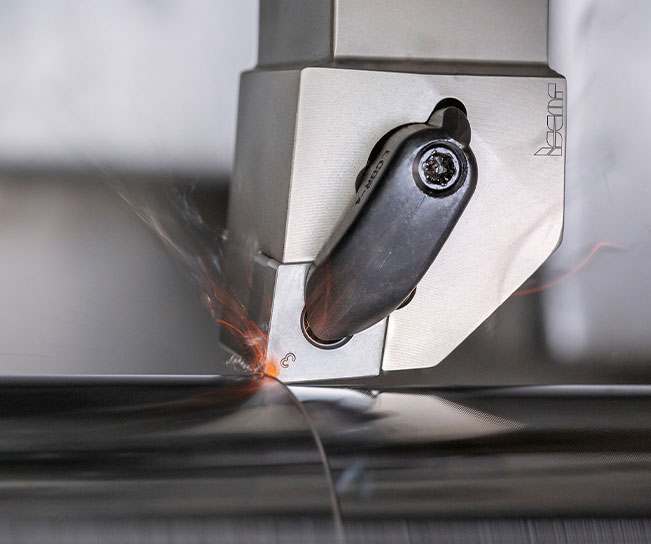 Fig.1
Fig.1
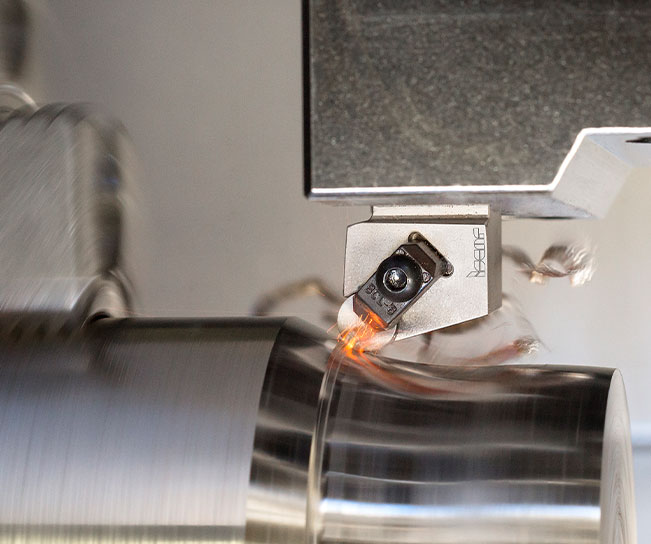 Fig.2
Fig.2
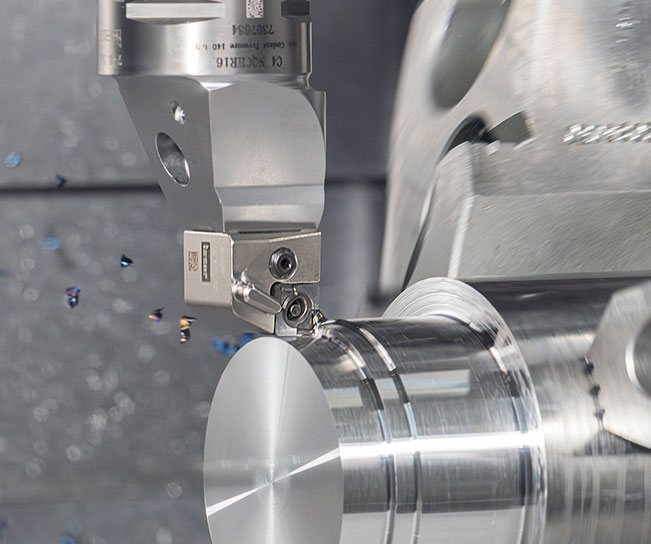 Fig.3
Fig.3
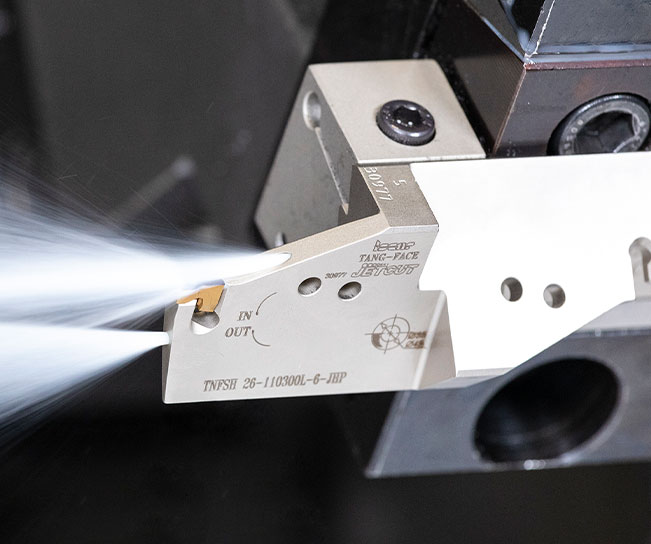 Fig.4
Fig.4